What Is Economic Populism?
A historical reference for readers of the 2026 Populist Realignment Map
A historical reference for readers of the 2026 Populist Realignment Map
The 2026 Populist Realignment Map tracks whether candidates running on economic populism can win competitive congressional races. This page provides the historical foundation: what economic populism is, where it came from, what it has actually accomplished, where it has failed, and how the policy fights of the 1890s through the 1930s connect to the races tracked in the main document.
The history is not simple. Economic populism produced the progressive income tax, antitrust law, deposit insurance, collective bargaining rights, and the minimum wage. It also produced Smoot-Hawley, exclusionary Social Security, agricultural policies that paid landowners to destroy crops during hunger, and a nativist streak that overlapped with the Chinese Exclusion Act. Both parts of the record matter. A reader who finishes this page should understand not just what populist movements achieved but what they got wrong, what was left out, and what the competing tradition - that concentrated wealth is best addressed by reducing government power rather than expanding it - gets right.
The data and the history belong to everyone. What you do with them is up to you.
1. What Economic Populism Is (and What It Is Not)
Economic populism is a political tradition built on a specific diagnosis: that concentrated economic power distorts democratic governance, suppresses wages, and transfers wealth from working people to a small ownership class - and that political action is required to correct it.
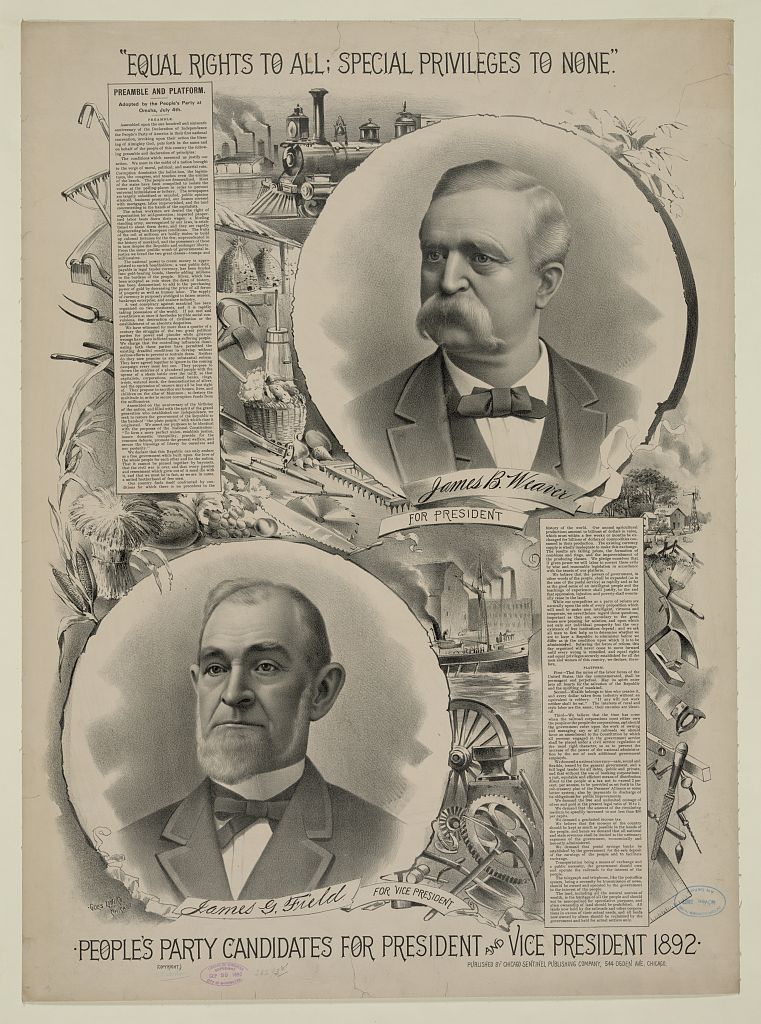
The term originates with the People's Party, formally organized in 1892, though the ideas it codified had been circulating among agrarian organizers, labor unions, and currency reformers since the 1870s. The Farmers' Alliance, the Grange, the Greenback Party, and the Knights of Labor all contributed planks to what became the Populist platform. The word "populist" entered American political vocabulary through this specific movement, not as a general synonym for "popular" or "anti-elite" but as the name of a party with a concrete legislative agenda [1].
That agenda was specific. The 1892 Omaha Platform called for a graduated federal income tax, direct election of U.S. senators, government regulation of railroads and telegraph lines, an eight-hour workday, postal savings banks, and currency reform to ease the deflation crushing agricultural debtors [2]. These were not vague grievances. They were draft legislation. Most of them eventually became law - not through the People's Party itself, which was absorbed into the Democratic Party by 1896, but through the Progressive Era and New Deal movements that inherited and enacted the Populist agenda over the following four decades.
What economic populism is not
It is not socialism. The original Populists were small farmers and rural entrepreneurs who defended private property and small enterprise against monopoly. Their quarrel was not with capitalism but with the concentration of capital in trusts that eliminated competition and captured the political system. The Omaha Platform's land plank demanded that excess railroad land grants be reclaimed for settlers - an expansion of private smallholding, not collective ownership [2].
It is not cultural populism. The term "populist" has been applied to movements organized around cultural identity, immigration restriction, or authoritarian nationalism. These share the rhetorical posture of speaking for "the people" against "the elite," but they differ from economic populism in their diagnosis and their proposed remedies. Economic populism identifies a structural economic problem (wealth concentration, monopoly power, wage suppression) and proposes structural economic solutions (antitrust, progressive taxation, labor law, financial regulation). Cultural populism identifies a cultural or demographic threat and proposes exclusionary solutions. The two can overlap - the original People's Party had a real nativist faction - but they are analytically distinct [3].
It is not anti-government per se. Economic populism has historically demanded more government action, not less - regulation of monopolies, taxation of concentrated wealth, public provision of services the market was failing to deliver (rural mail, rural electrification, deposit insurance). The competing tradition, rooted in classical liberalism and libertarian economics, argues that this gets the causation backward: concentrated wealth captures government power because the government has so much power to sell, and the correct remedy is to reduce that power rather than expand it. The disagreement is about means, not the underlying problem. Both traditions start from the observation that the political system is rigged in favor of concentrated wealth. They diverge on the solution [4].
It is not utopian. The historical record of economic populism includes significant failures, unintended consequences, racial exclusions, and policies that made problems worse. Section 6 of this page covers these in detail. The tradition's strength is not that it always gets things right but that it has produced the specific institutional reforms (antitrust, deposit insurance, the minimum wage) that most Americans now take for granted as features of a functioning economy.
2. The First Gilded Age and the Populist Response (1870–1900)
The economic conditions that produced the Populist movement were not abstract. They were experienced daily by millions of Americans as falling crop prices, rising debt, railroad monopoly pricing, deflationary monetary policy, and the visible, extravagant accumulation of wealth by a small industrial class.
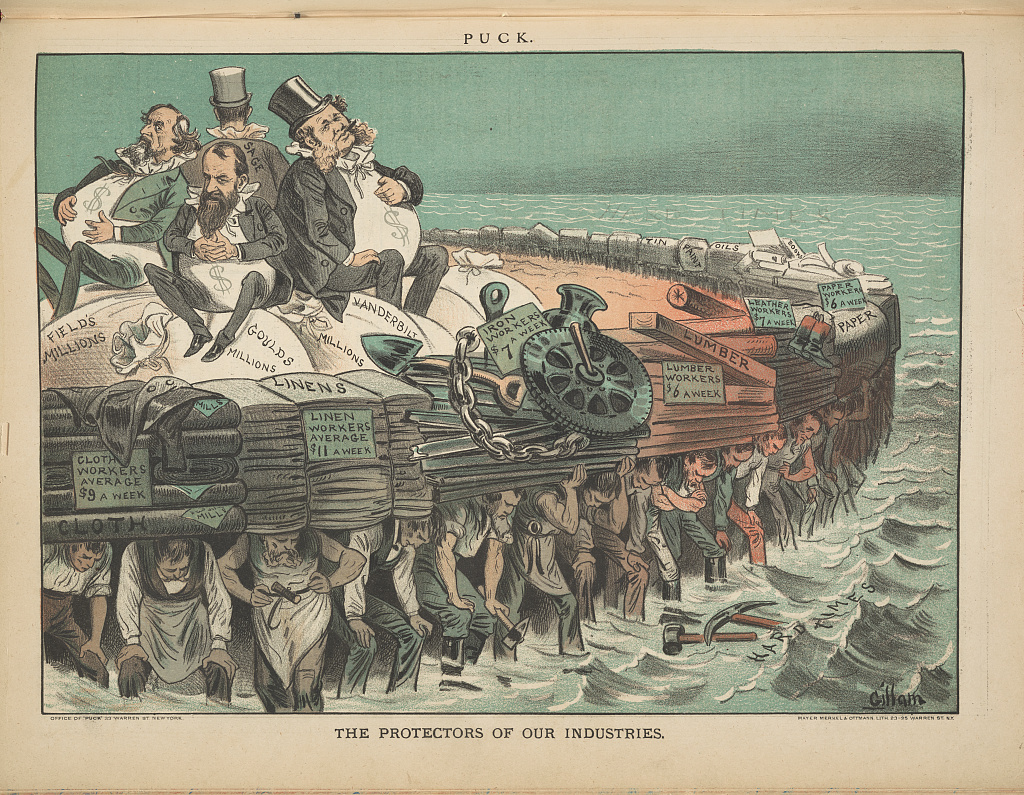
The structural picture. Between 1870 and 1900, the American economy industrialized at extraordinary speed. Railroad mileage grew from approximately 53,000 miles in 1870 to over 258,000 miles by 1900. Steel production rose from roughly 77,000 tons in 1870 to over 11 million tons by 1900. The gross national product nearly tripled in real terms. But the gains were radically concentrated. By 1890, the top 1% of American families owned more wealth than the bottom 99% combined. The richest 4,000 families - roughly 0.03% of the population - held approximately as much wealth as the other 11.6 million families. Meanwhile, the average annual wage for a non-farm worker was approximately $475 (about $16,000 in 2025 dollars), with no minimum wage, no overtime protections, and no safety regulations [5][6].
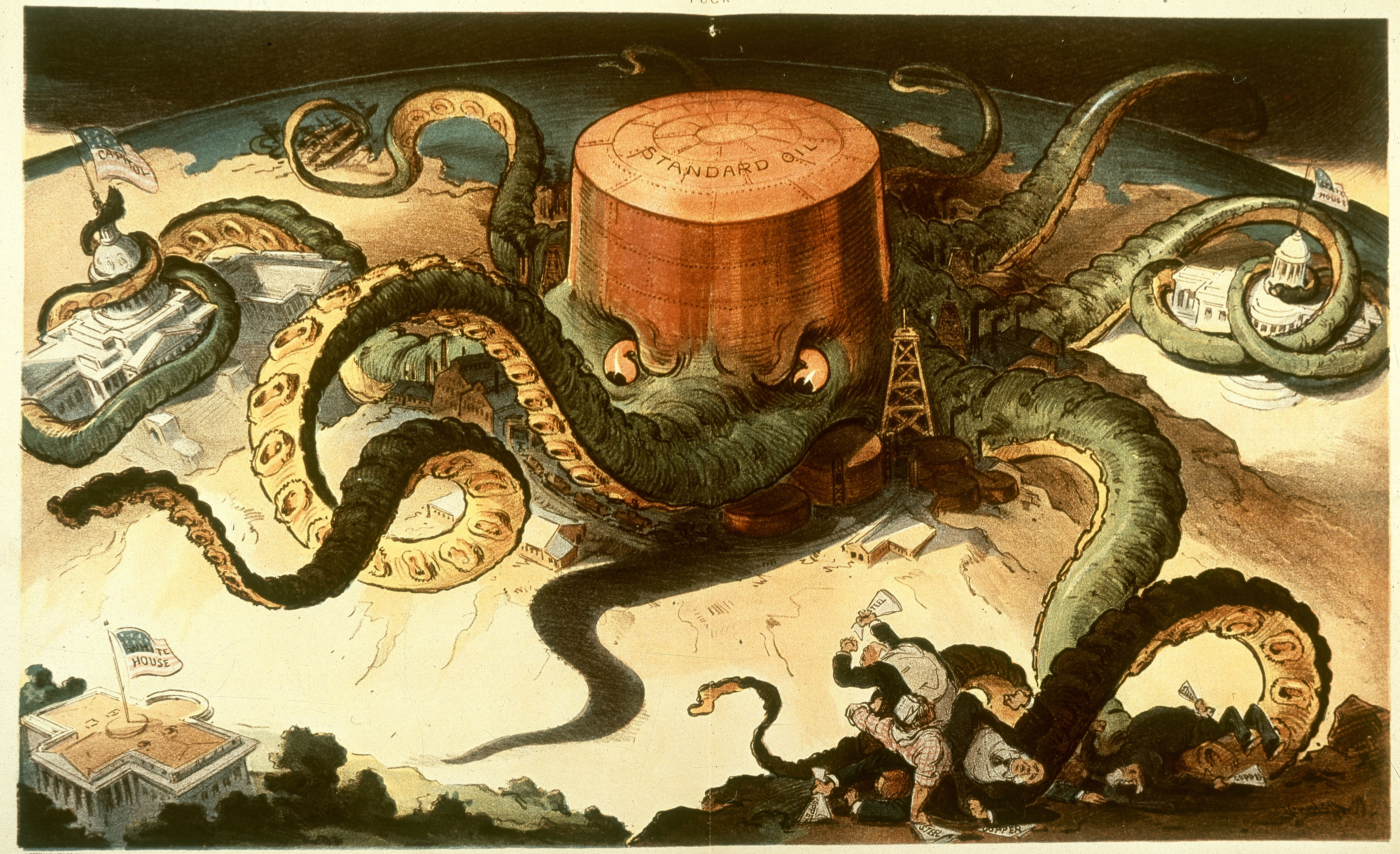
Industrial consolidation produced monopolies or near-monopolies across the economy's commanding heights. Standard Oil controlled roughly 90% of U.S. oil refining by 1880, achieved through a systematic campaign of predatory pricing, secret railroad rebates, and forced acquisitions that Ida Tarbell would document in forensic detail two decades later. Carnegie Steel dominated the steel industry. Railroads, though nominally competitive, coordinated through rate pools and information-sharing agreements that fixed prices for shippers. J.P. Morgan's banking network exercised control over industrial finance sufficient that the Pujo Committee of Congress later concluded (in 1913) that a "money trust" of fewer than 20 individuals held 341 directorships in 112 corporations with combined resources of over $22 billion - at a time when the entire federal budget was approximately $700 million [7][51].
The labor conditions were bad by any standard. In 1900, the average industrial workweek was approximately 59 hours. Workplace deaths exceeded 35,000 per year in the early 1900s, with mining, railroading, and steel among the deadliest occupations. The Triangle Shirtwaist Factory fire of 1911, which killed 146 garment workers (mostly young immigrant women) in lower Manhattan, became an emblem of the era's industrial conditions - locked exits, no fire escapes, no safety inspections. Child labor was widespread: the 1900 Census counted approximately 1.75 million children between ages 10 and 15 in the workforce [52].
For farmers, the crisis was specific and measurable. Wheat prices fell from $1.19 per bushel in 1881 to $0.49 in 1894 - a 59% decline - while railroad shipping rates, equipment costs, and interest on farm mortgages remained high or rose. Cotton prices fell from roughly $0.15 per pound in 1870 to $0.06 by 1898. Farmers were trapped: they had to produce more to service their debts, which drove prices lower, which deepened the debt. Farm tenancy rates - the share of farmers who rented rather than owned their land - rose from approximately 25% in 1880 to 35% by 1900, a reversal of the Jeffersonian ideal of the independent yeoman farmer [8].
The monetary system compounded the problem. The United States operated on the gold standard, which constrained the money supply and produced persistent deflation - the general price level fell by roughly 30% between 1870 and 1896. Creditors benefited (debts became worth more in real terms); debtors - (which meant most farmers) were crushed. A farmer who borrowed $1,000 in 1880 effectively owed the equivalent of $1,400 by 1896 in purchasing power terms, even if the nominal debt stayed the same. The Populist demand for silver coinage was, underneath the monetary jargon, a demand for inflation - a debtors' relief program administered through the currency [9].
The organizing response. The Farmers' Alliance, which grew out of the Grange movement of the 1870s, organized cooperatives for purchasing supplies and marketing crops, established over 1,000 local chapters across the South and Midwest, and developed a political education program that trained tens of thousands of "lecturers" - traveling organizers who held meetings in schoolhouses and churches [10]. The Alliance's membership reached an estimated 1 to 3 million by 1890. The Colored Farmers' Alliance, a parallel organization for Black farmers, claimed 1.2 million members, though its institutional resources were far more limited and it faced violent repression in the South [11].
When working within the two major parties proved insufficient - Alliance-backed Democrats in the South frequently betrayed reform commitments once in office - the movement created its own party. On July 4, 1892, delegates from farm organizations, labor unions, and reform movements gathered in Omaha, Nebraska, and ratified the platform that would define American economic populism for the next half-century.
The Omaha Platform (1892). The platform's preamble, written by Minnesota lawyer and novelist Ignatius Donnelly, declared that the nation had been "brought to the verge of moral, political, and material ruin" by the concentration of wealth and political corruption. Its substantive planks included [2]:
- A graduated federal income tax (to replace tariff-dependent revenue)
- Direct election of U.S. senators (then chosen by state legislatures, which were frequently controlled by railroad and industrial interests)
- Government ownership or regulation of railroads, telegraph, and telephone systems
- A flexible national currency issued by the government rather than private banks
- Free coinage of silver at a 16:1 ratio to gold (to expand the money supply and ease deflation)
- An eight-hour workday
- Postal savings banks
- Restriction of land monopolies - reclamation of excess railroad land grants for actual settlers
- The secret ballot (to prevent employer and party-boss coercion at polls)
- Initiative and referendum provisions
The platform also included an immigration restriction plank calling for limits on "pauper and criminal classes" - language that reflected real nativist sentiment within the movement, particularly in western states where anti-Chinese hostility was widespread. This strain of Populism is addressed in Section 6 [2].
Electoral results. The People's Party performed better than any third party since the Civil War. In 1892, presidential candidate James B. Weaver won over one million popular votes (8.5% of the total) and carried five states - Colorado, Kansas, Idaho, Nevada, and part of Oregon - earning 22 electoral votes. The party elected governors in Kansas, Colorado, and North Dakota; sent over a dozen members to Congress; and won control of several state legislatures [12].
In the South, the Populist movement attempted something radical for the era: a biracial political coalition. Tom Watson of Georgia and other southern Populists argued that poor white and poor Black farmers were being exploited by the same planter and merchant class, and that racial division was the primary tool the Democratic establishment used to prevent economic reform. This coalition was met with systematic violence, voter suppression, and fraud. After the movement's defeat, the same Democratic establishment that crushed Populism enacted Jim Crow laws and Black disenfranchisement across the South [13].
The Panic of 1893 and radicalization. The financial crisis of 1893 - triggered by railroad overbuilding, a run on gold reserves, and the failure of the National Cordage Company - deepened the conditions that had created the Populist movement. Over 500 banks failed. Unemployment reached an estimated 17-19% by 1894. The Pullman Strike of 1894, in which railroad workers protesting wage cuts were crushed by federal troops and a court injunction under the Sherman Antitrust Act (again, used against labor), demonstrated to many working-class Americans that the federal government functioned as an enforcement arm of industrial capital. The Populist diagnosis - that the political system served concentrated wealth rather than the public - was being confirmed in real time [56].
The 1896 fusion and defeat. By the mid-1890s, a faction of the People's Party - prioritizing the silver currency issue over the broader platform - pushed for fusion with the Democratic Party, which nominated William Jennings Bryan for president on a free-silver platform in 1896. The fusion decision was bitterly contested within the People's Party. "Mid-road" Populists argued that merging with the Democrats would dilute the movement's broader structural agenda into a single-issue silver campaign - which is exactly what happened. Fusionists countered that the silver issue was the wedge that could break the gold-standard establishment in both parties.
Bryan's campaign electrified rural and working-class voters and produced some of the most famous oratory in American political history. He was 36 years old, a first-term congressman, and he traveled over 18,000 miles by rail to deliver more than 600 speeches - an unprecedented personal campaign in an era when presidential candidates traditionally stayed home. But he lost to William McKinley, who outspent him roughly 5-to-1 with funding from industrial interests organized by campaign manager Mark Hanna. Hanna raised an estimated $3.5 million (approximately $130 million in 2025 dollars) from corporations, banks, and industrialists - the first modern corporate campaign war chest. Standard Oil alone contributed $250,000. The spending disparity between Bryan and McKinley is a structural parallel to the campaign finance dynamics tracked in the 2026 document: the populist candidate generates mass enthusiasm and small-dollar energy; the establishment candidate is backed by concentrated wealth [14].
The fusion destroyed the People's Party as an independent force. But it planted Populist ideas inside the Democratic Party and, paradoxically, inside the Republican Party's progressive wing. The Panic of 1893, the Pullman Strike, and Bryan's campaign had mainstreamed the Populist diagnosis. Within a decade, Republican Theodore Roosevelt was pursuing antitrust enforcement and railroad regulation - core Populist demands - from the White House. The party died. Its agenda lived.
3. The Progressive Era: Populist Ideas Become Law (1901–1920)
The Progressive Era is often taught as a separate movement from Populism - more urban, more middle-class, more focused on good government than on class conflict. There is truth in these distinctions. But the legislative achievements of the Progressive Era are, to a remarkable degree, the Omaha Platform enacted into law. The Populists identified the problems; the Progressives, working through the major parties and with a broader coalition, passed the statutes.
Antitrust. The Sherman Antitrust Act had been on the books since 1890, but it was rarely enforced against industrial monopolies - it was actually used more frequently against labor unions, whose strikes and boycotts were treated as illegal restraints of trade [15]. Enforcement changed under Theodore Roosevelt, who filed 44 antitrust suits during his presidency. The most consequential was the 1904 Northern Securities Co. v. United States case, in which the Supreme Court ordered the dissolution of J.P. Morgan's railroad holding company - the first successful federal antitrust action against a major industrial combination [16].
The landmark came in 1911: Standard Oil Co. of New Jersey v. United States. The Supreme Court unanimously upheld the breakup of John D. Rockefeller's petroleum monopoly, which at its peak controlled approximately 90% of U.S. oil refining. The Court ordered Standard Oil dissolved into 34 separate companies. (The irony: Rockefeller held a quarter of Standard Oil's stock, and since the successor companies' combined stock values more than doubled, the breakup approximately tripled his personal wealth.) [17][18]
The Standard Oil decision established the "rule of reason" in antitrust law - that only "unreasonable" restraints on trade violated the Sherman Act. In 1914, Congress strengthened the framework with two additional laws:
- The Clayton Antitrust Act (1914): Prohibited specific anticompetitive practices (price discrimination, tying arrangements, anti-competitive mergers) and - critically - exempted labor unions from antitrust prosecution. Samuel Gompers of the AFL called it "labor's Magna Carta" [19].
- The Federal Trade Commission Act (1914): Created an expert regulatory agency to investigate and prevent unfair business practices, replacing ad hoc prosecution with institutional oversight [20].
Constitutional amendments. Two of the Omaha Platform's most ambitious demands became constitutional amendments during this period:
-
The 16th Amendment (1913): Authorized the federal income tax. Before this, the federal government relied primarily on tariffs for revenue - a regressive system that taxed consumption rather than wealth. The Supreme Court had struck down a prior income tax in Pollock v. Farmers' Loan & Trust Co. (1895), making a constitutional amendment necessary. The 16th Amendment enabled progressive taxation - higher rates on higher incomes - which became the primary funding mechanism for the modern federal government and the single most important tool for wealth redistribution in American history [21].
-
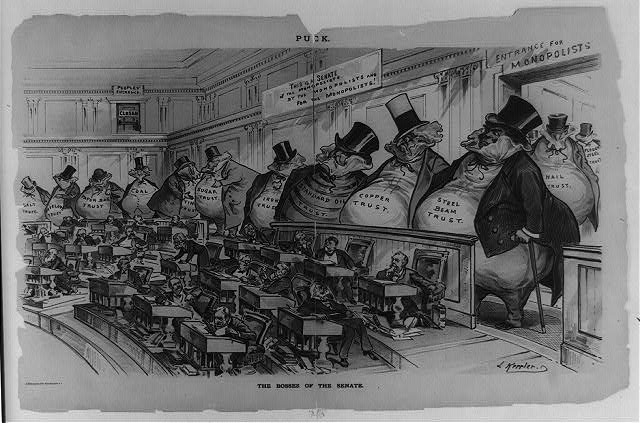
The 17th Amendment (1913): Established direct popular election of U.S. senators. Previously, senators were chosen by state legislatures, which were frequently dominated by railroad and industrial interests. As Keppler's "Bosses of the Senate" cartoon illustrated, the pre-reform Senate was widely understood as a body controlled by the industries it was supposed to regulate. Direct election didn't eliminate corporate influence, but it created accountability to a mass electorate [22].
Consumer protection, muckraking, and the power of investigative journalism. The muckraking journalists of the early 1900s provided something the Populist movement had lacked: a mass urban audience for the critique of concentrated economic power. The Populists had organized rural America; the muckrakers reached the cities.
Ida Tarbell's 19-part investigative series on Standard Oil, published in McClure's Magazine between 1902 and 1904 and later collected as The History of the Standard Oil Company, remains one of the most influential works of investigative journalism in American history. Tarbell documented, through corporate records, court testimony, and interviews, the specific mechanisms by which Rockefeller built his monopoly: secret railroad rebates, predatory pricing that undercut local competitors until they sold out or failed, espionage on competitors' shipments, and the operation of nominally "independent" companies that were actually Standard Oil subsidiaries. Her work transformed public opinion and directly influenced the federal antitrust suit that broke up Standard Oil in 1911 [7].
Upton Sinclair's The Jungle (1906) intended to expose the exploitation of immigrant workers in Chicago's meatpacking industry. It ended up exposing the unsanitary conditions of the meat itself. Sinclair later observed that he had aimed for the public's heart and hit its stomach. The book's descriptions of diseased cattle, rat-infested processing facilities, and adulterated products produced a public health panic that Congress could not ignore. The legislative results:
- The Pure Food and Drug Act (1906): Prohibited the sale of adulterated or mislabeled food and drugs. Created the foundation for what became the Food and Drug Administration [23].
- The Meat Inspection Act (1906): Mandated federal inspection of meat processing facilities, with the costs borne by the government rather than the industry - a compromise that industry lobbyists secured and reformers accepted as preferable to no regulation [24].
- The Hepburn Act (1906): Gave the Interstate Commerce Commission actual enforcement power over railroad rates - fulfilling the Populist demand for railroad regulation, though stopping short of the government ownership the Omaha Platform had called for [25].
Lincoln Steffens's The Shame of the Cities (1904) documented municipal corruption in St. Louis, Minneapolis, Pittsburgh, and other cities, connecting local graft to the same structural pattern the Populists had identified at the national level: concentrated economic interests purchasing political outcomes. The muckrakers demonstrated that investigative journalism could function as a democratic accountability mechanism - providing the information that voters needed to demand reform. The parallel to the modern era is not exact (the media environment has fragmented in ways the muckrakers could not have anticipated), but the underlying function - turning documentary evidence of systemic dysfunction into political pressure - remains central to democratic self-correction [59].
The limits. The Progressive Era's labor achievements were real but incomplete. The Keating-Owen Act (1916), the first federal child labor law, was struck down by the Supreme Court in Hammer v. Dagenhart (1918) on the grounds that Congress lacked authority to regulate manufacturing under the Commerce Clause. Federal child labor prohibition would not become durable law until the Fair Labor Standards Act of 1938 [26]. Women gained the vote through the 19th Amendment (1920), but the amendment was the product of the suffrage movement rather than the Populist tradition per se, and the Populist movement's record on women's rights was mixed - supportive in some state platforms, silent in others.
State-level innovation. Much of the Progressive Era's most innovative policy emerged at the state level first. Wisconsin under Governor Robert La Follette became the laboratory: the state enacted a direct primary law (1903), a railroad regulatory commission with real enforcement power, a state income tax (1911), and a workers' compensation system. Oregon adopted the initiative, referendum, and recall - direct democracy tools from the Omaha Platform. New York, after the Triangle fire, created a Factory Investigating Commission that produced over 30 new labor laws between 1911 and 1915, covering fire safety, working hours, sanitation, and the employment of women and children. Frances Perkins, who witnessed the Triangle fire and served on the investigating commission, would later become FDR's Secretary of Labor and the architect of the Social Security Act - a direct line from Progressive-era state reform to New Deal federal policy [53].
The era's reforms also did little to address racial inequality directly. Progressive Era policies were frequently designed or administered in ways that excluded Black Americans, and the period coincided with the consolidation of Jim Crow, the Nadir of American race relations, and the Supreme Court's validation of "separate but equal" in Plessy v. Ferguson (1896). Woodrow Wilson, a Progressive president who enacted significant economic reforms, also re-segregated the federal civil service. The Progressive movement's racial blind spot - like the Populist movement's nativist streak - is not a peripheral embarrassment; it is a structural feature that shaped which Americans benefited from reform and which were left out.
4. The New Deal: Crisis as Catalyst (1933–1938)
The Progressive Era reforms were substantial but incomplete. They regulated the worst abuses of industrial monopoly and created the institutional framework for federal oversight, but they did not fundamentally alter the distribution of economic power. That required a crisis.
The Great Depression provided it. Between 1929 and 1933, U.S. GDP fell by roughly 30%, unemployment reached approximately 25%, over 9,000 banks failed (wiping out depositors' savings with no insurance), and industrial production dropped by nearly half. Farm income fell 60% between 1929 and 1932. The stock market lost approximately 89% of its value between September 1929 and July 1932. The economic system that the Progressive Era had regulated but not restructured collapsed [27].
The political context matters as much as the economic crisis. Herbert Hoover was not the do-nothing president of popular memory - he signed the Reconstruction Finance Corporation into law and expanded public works spending - but his interventions were insufficient and his instinct toward voluntarism (asking businesses to maintain wages rather than requiring it, asking banks to lend rather than guaranteeing deposits) failed. By the winter of 1932-33, the political system was under real pressure. Hunger marches, farmer foreclosure protests (the "Farm Holiday Movement" in Iowa physically blocked produce shipments and prevented foreclosure auctions), and veteran encampments (the Bonus Army) demonstrated that democratic legitimacy required an economic response of a different scale [54].
The New Deal, enacted in overlapping waves between 1933 and 1938 under Franklin Roosevelt, produced the institutional architecture of the modern American economy. The "First New Deal" (1933-34) focused on emergency relief, banking stabilization, and industrial recovery. The "Second New Deal" (1935-38) - often more radical than the first, driven partly by pressure from populist figures like Huey Long and Father Coughlin who argued FDR was not going far enough - produced the enduring structural reforms. Many of its specific programs were direct descendants of Populist and Progressive proposals; others were improvisations forced by the crisis. The combined effect was the most rapid expansion of federal economic authority in American history.
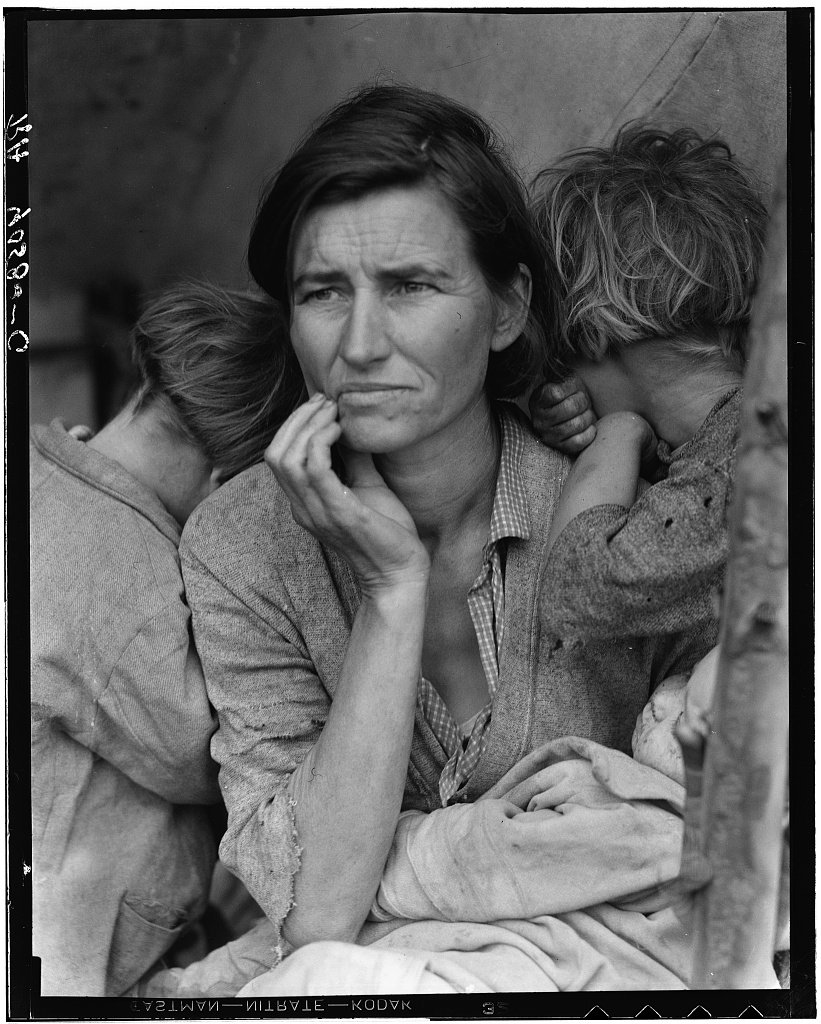
The policy inventory
Financial regulation and deposit insurance. The Banking Act of 1933 (Glass-Steagall) separated commercial banking from investment banking, prohibiting deposit-taking institutions from engaging in speculative securities trading. The same legislation created the Federal Deposit Insurance Corporation (FDIC), which guaranteed individual bank deposits up to $2,500 (now $250,000). Before the FDIC, a bank failure wiped out depositors entirely; after it, bank runs became rare and depositors' savings were protected by the federal government [28]. The Securities Act of 1933 required companies issuing stock to disclose financial information to investors. The Securities Exchange Act of 1934 created the Securities and Exchange Commission (SEC) to regulate stock exchanges and enforce disclosure requirements [29].
The Populist lineage is direct. The Omaha Platform's call for postal savings banks and a national currency managed by the government rather than private banks reflected the same distrust of unregulated private finance that produced Glass-Steagall four decades later.
Labor rights. The National Labor Relations Act of 1935 (Wagner Act) established the legal right of workers to organize unions and bargain collectively, and created the National Labor Relations Board (NLRB) to enforce these rights. Before the Wagner Act, employers could fire workers for union activity, refuse to recognize unions, and use private security forces (the Pinkerton system the Omaha Platform had specifically condemned) to break strikes [30].
The effect was measurable: union membership rose from approximately 3.6 million in 1935 to 10.2 million by 1941 - from roughly 13% to over 27% of the non-agricultural workforce. By the mid-1950s, union density peaked at approximately 35%. The correlation between union density and middle-class income share is one of the most consistent findings in labor economics [31].
Social insurance. The Social Security Act of 1935 created old-age insurance (retirement pensions), unemployment insurance, and aid to dependent children. Before Social Security, old age in America meant, for most working people, dependence on family or charity. Approximately half of elderly Americans lived in poverty before the program; by the late 20th century, the poverty rate for seniors had fallen below 10% [32].
Wage and hour standards. The Fair Labor Standards Act of 1938 (FLSA) established the first permanent federal minimum wage ($0.25 per hour, equivalent to approximately $5.50 in 2025 dollars), mandated overtime pay for work exceeding 40 hours per week, and prohibited most child labor - finally accomplishing at the federal level what the Keating-Owen Act had attempted and the Supreme Court had struck down in 1918 [33].
Rural development. The Rural Electrification Act of 1936 created the Rural Electrification Administration (REA), which provided low-interest loans for building electrical infrastructure in rural areas. In 1935, approximately 90% of urban Americans had electricity; only about 10% of rural Americans did. By 1950, the figure had risen to approximately 90% nationwide. Rural electrification transformed agricultural productivity, household labor (particularly for women), and the basic quality of rural life [34].
Direct employment. The Works Progress Administration (WPA, 1935-1943) employed approximately 8.5 million Americans over its lifetime - building 650,000 miles of roads, 125,000 public buildings, 75,000 bridges, and 8,000 parks. The Civilian Conservation Corps (CCC, 1933-1942) employed approximately 3 million young men in environmental conservation work. These programs served a dual purpose: they provided income during mass unemployment and they built the physical infrastructure - roads, bridges, schools, post offices, airports, water systems - that supported postwar economic growth. The WPA's Federal Art Project, Federal Writers' Project, and Federal Theatre Project also employed artists, writers, and performers, producing works that documented American life during the Depression - including the FSA photography project whose images illustrate this page [57].
Progressive taxation. The Revenue Act of 1935 - which Roosevelt called and critics nicknamed the "Wealth Tax Act" - raised the top marginal income tax rate to 79% on income over $5 million. Combined with subsequent wartime tax increases, top marginal rates reached 94% during World War II and remained above 70% until 1981. The revenue funded both the New Deal programs and the wartime mobilization that created full employment [35].
The conservative and libertarian counter-narrative. The New Deal was not universally viewed as a success at the time, and the competing critique matters. The monetarist argument, developed most fully by Milton Friedman and Anna Schwartz, holds that the Depression was caused primarily by Federal Reserve monetary contraction - not by the structural failures the Populists diagnosed - and that many New Deal interventions (particularly the NIRA codes and the AAA) prolonged the downturn by creating uncertainty and distorting market signals. Amity Shlaes, in The Forgotten Man, argues that the New Deal's high taxes and regulatory unpredictability discouraged private investment, delaying recovery. These arguments are not easily dismissed: unemployment remained above 14% through 1940 and did not fall to pre-Depression levels until wartime mobilization created full employment through massive government spending of a different kind. The New Deal's defenders counter that the economy grew at over 9% annually between 1933 and 1937 - until FDR, heeding balanced-budget advice, cut spending in 1937 and triggered a sharp recession that validated the Keynesian case for sustained government intervention. The debate is unresolved and probably unresolvable, but the institutional legacy - the specific programs and agencies created - has outlasted the macroeconomic argument [4][58].
The compression effect. The combined impact of New Deal labor, tax, financial, and social insurance policies produced what economists Claudia Goldin and Robert Margo termed "the Great Compression" - a sustained narrowing of income and wealth inequality that lasted from roughly 1935 to 1980. The top 1%'s share of national income fell from approximately 24% in 1928 to below 10% by the mid-1970s. Real wages for median workers roughly doubled between 1947 and 1973. This was not an accident or a natural market outcome; it was the measurable result of specific policy choices [36][37].
The connection to the 2026 Populist Realignment Map's data: the wealth inequality charts at 2026gildedage.com/charts show this compression and its reversal. The top 1% wealth share fell from roughly 30% in the late 1920s to approximately 20% by the mid-1970s, then began rising again - reaching 31.7% by Q3 2025, exceeding even the 1920s peak in the Federal Reserve's data series.
5. The Great Compression and Its Reversal (1940–present)
The four decades following the New Deal produced the broadest-based prosperity in American history. The four decades after that reversed it. Both outcomes are traceable to specific policy choices.
The compression (1940–1980). The postwar economy operated under the institutional framework the New Deal established: strong unions (density peaking at ~35% in the mid-1950s), progressive taxation (top marginal rates above 70%), financial regulation (Glass-Steagall separating banking from speculation), social insurance (Social Security, unemployment insurance), and minimum wage floors that rose in real terms. Under these conditions [36][37][38]:
- Real median family income roughly doubled between 1947 and 1973
- Productivity gains and worker compensation grew at approximately the same rate - when the economy grew, workers' wages grew with it
- The top 1%'s income share fell to its lowest recorded level (approximately 8-10%)
- Home ownership expanded dramatically, supported by the GI Bill and FHA lending
- Poverty rates fell substantially, particularly among the elderly (Social Security) and among families with union-wage earners
This was the era that produced the American middle class as a mass phenomenon - not as a natural outcome of capitalism, but as the product of a specific institutional architecture that the Populist and Progressive movements had spent decades building.
It was not universally shared. The GI Bill, the FHA mortgage program, and the postwar suburban expansion were administered in racially discriminatory ways. Black veterans received fewer GI Bill benefits due to university segregation and discriminatory job-training programs. FHA lending guidelines explicitly redlined Black neighborhoods. The postwar prosperity was real but racially stratified - a pattern that shaped wealth accumulation for generations. The median Black family's wealth today is approximately one-eighth that of the median white family, and the roots of that gap trace directly to the racially unequal distribution of postwar economic gains [55].
The reversal (1980–present). Beginning in the late 1970s and accelerating through the 1980s, each pillar of the New Deal institutional framework was weakened or dismantled:
- Union decline: Union density fell from ~35% in the mid-1950s to approximately 10% today (6% in the private sector). The decline was driven by a combination of employer resistance (illegal firings of union organizers increased dramatically after the PATCO strike in 1981), manufacturing offshoring, right-to-work laws, and NLRB decisions that narrowed the scope of the Wagner Act [39].
- Tax reduction at the top: The Economic Recovery Tax Act of 1981 cut the top marginal income tax rate from 70% to 50%; the Tax Reform Act of 1986 cut it further to 28%. Capital gains tax rates fell from 35% to 20% over the same period. The result was a massive shift in after-tax income toward the top of the distribution [40].
- Financial deregulation: The Depository Institutions Deregulation and Monetary Control Act (1980), the Garn-St. Germain Act (1982), and the Gramm-Leach-Bliley Act (1999, which formally repealed Glass-Steagall) progressively removed the barriers between commercial banking, investment banking, and insurance. The 2008 financial crisis - the worst since the Depression - followed within a decade of Glass-Steagall's repeal [41].
- Minimum wage erosion: The federal minimum wage has not been raised since 2009 ($7.25/hour). Adjusted for inflation, it has lost approximately 30% of its purchasing power since its peak in 1968. Had the minimum wage tracked productivity growth since 1968, it would be over $24 per hour [42].
- Campaign finance deregulation: The Supreme Court's Citizens United v. FEC (2010) decision struck down limits on corporate and union independent expenditures in elections, holding that political spending is protected speech under the First Amendment. The subsequent SpeechNow.org v. FEC decision enabled the creation of Super PACs - organizations that can raise and spend unlimited amounts. The result has been a return to Gilded Age-scale political spending by concentrated wealth: in 2024, just 100 billionaire families contributed approximately $2.6 billion to federal elections, representing roughly one of every six dollars spent. Billionaire political spending has increased roughly 160-fold since Citizens United. The 17th Amendment addressed the mechanism by which Gilded Age wealth captured the Senate (state legislature control); Citizens United re-opened a different channel (direct electoral spending) that the Populists of 1892 could not have anticipated [60].
The measurable result. Since 1978, CEO realized compensation has risen 1,094%; typical worker compensation has risen 26% over the same period. The CEO-to-worker pay ratio was 21:1 in 1965, 31:1 in 1978, 380:1 in 2000, and 281:1 in 2024. The top 1%'s share of national wealth has returned to 31.7% - exceeding the level that preceded the New Deal. Worker productivity and worker compensation, which tracked each other closely from 1948 to 1973, diverged sharply after 1979: productivity has risen approximately 80% since then while median hourly compensation has risen approximately 17% [42][43].
These are not theoretical observations. They are the empirical foundation of the "Second Gilded Age" thesis that the 2026 Populist Realignment Map tracks - and they are the conditions that the candidates profiled in that document are running against.
The productivity-compensation divergence may be the most important graph in American economic history. For 30 years (1948-1978), the two lines moved in lockstep: when the economy became more productive, workers were paid more. For the 47 years since (1979-2026), productivity has continued to rise while median compensation has barely budged. The gap between the two lines represents trillions of dollars in economic output that was produced by the workforce but captured by capital owners and executives. Every policy fight in the crosswalk table below (labor law, minimum wage, tax policy, antitrust, campaign finance) comes back to where that gap goes and who gets to decide.
The full data is available at 2026gildedage.com/charts, including historical wealth distribution, CEO-to-worker pay ratios, billionaire wealth growth, and the cross-era comparison table. The charts page is the empirical companion to this historical narrative - it shows the numbers that this page explains.
6. Failures, Overcorrections, and Unintended Consequences
An honest historical account of economic populism must include what went wrong. The tradition's failures are not footnotes; several of them caused immense harm, and the patterns of failure reveal risks that remain relevant.
Protectionism as populist overreach: Smoot-Hawley (1930). The Smoot-Hawley Tariff Act raised tariffs on over 20,000 imported goods to record levels. It was supported by farm-state legislators who wanted to protect agricultural prices and by industrial interests seeking shelter from foreign competition. Over 1,000 economists signed a public letter urging President Hoover to veto the bill. He signed it anyway. Trading partners retaliated with their own tariffs; global trade contracted by approximately 66% between 1929 and 1934. Smoot-Hawley did not cause the Depression, but it deepened it substantially and demonstrated that protectionism - a recurring populist impulse - can produce catastrophic unintended consequences [44].
Cartelization as reform: the NRA codes (1933–1935). The National Industrial Recovery Act (NIRA) attempted to stabilize the economy by allowing industries to set production codes - effectively government-sanctioned cartelization. The codes often benefited large firms at the expense of small competitors and raised consumer prices. The Supreme Court struck down the NIRA unanimously in A.L.A. Schechter Poultry Corp. v. United States (1935), holding that it delegated excessive legislative power to the executive. The Schechter decision is often cited as a constitutional correction of a genuine overreach - the government authorized private industry to write its own rules, and the results were predictably self-serving [45].
Agricultural destruction during hunger: the AAA (1933). The Agricultural Adjustment Act paid farmers to reduce production in order to raise crop prices. In practice, this meant plowing under 10 million acres of cotton and slaughtering 6 million pigs in 1933 - while millions of Americans went hungry. The policy was regressive by design: payments went to landowners, not sharecroppers or tenant farmers. In the South, this meant that white landowners received federal payments while Black sharecroppers - who worked the land but had no legal claim to it - were evicted or received nothing. An estimated 100,000 to 200,000 Black farm families were displaced by AAA-related evictions and acreage reductions [46][47].
Racial exclusions in Social Security (1935). The original Social Security Act excluded domestic workers and agricultural laborers from coverage. These were the two largest employment categories for Black workers - approximately 65% of Black workers fell into one of these categories in the 1930s, compared to roughly 27% of white workers. The exclusion was not accidental; it was the price of securing Southern Democratic votes in Congress. Southern committee chairs refused to support a social insurance system that would provide benefits to Black workers independent of the plantation economy. The exclusions were gradually eliminated over subsequent decades (domestic workers were covered in 1950, farm workers in 1954), but the original design reflected the political economy of racial exclusion built into the New Deal coalition [48].
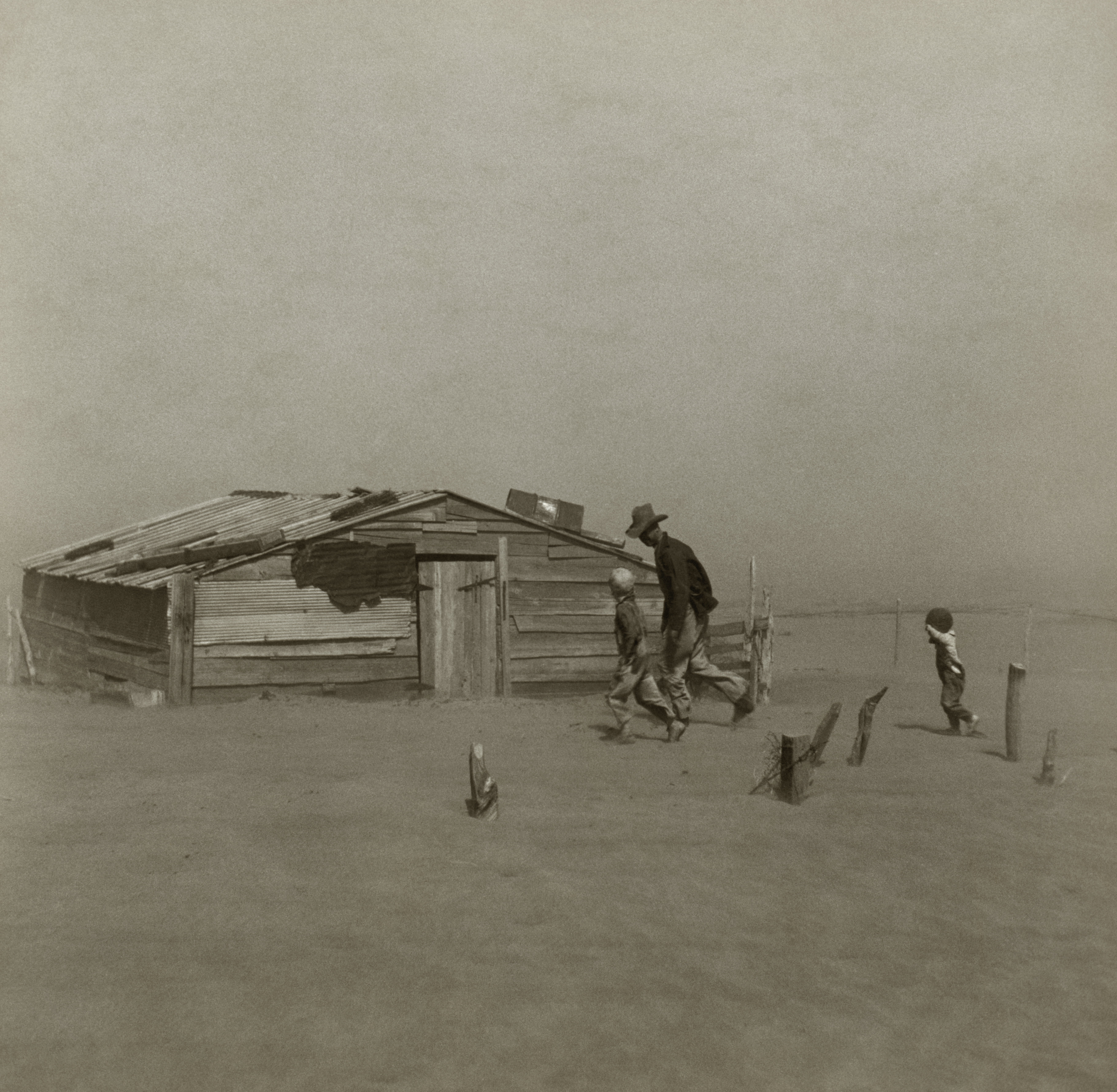
Populist nativism: the Chinese Exclusion Act and its echoes. The Chinese Exclusion Act of 1882 - the first federal law to bar immigration by a specific nationality - preceded the People's Party by a decade, but it drew from overlapping constituencies. The anti-Chinese movement was strongest among white working-class voters in western states who viewed Chinese laborers as wage competitors. The Omaha Platform's immigration plank, calling for restriction of "pauper and criminal classes," reflected this nativist strain. The People's Party in the West included vocal anti-Chinese and anti-immigrant factions. This is a persistent tension within populist movements: the economic diagnosis (wages are being suppressed) can easily slide into a scapegoating diagnosis (wages are being suppressed by immigrants) rather than a structural one (wages are being suppressed by monopoly and capital concentration) [49]. At its most extreme, this slide produces authoritarian movements that adopt populist economic vocabulary while directing popular anger at ethnic or religious groups rather than at systems — a pattern this document's thesis explicitly rejects.
Regulatory capture: the ICC as cautionary tale. The Interstate Commerce Commission, created in 1887 to regulate railroad rates, is a textbook case of an agency captured by the industry it regulates. By the mid-20th century, the ICC had become a cartel manager for the railroad industry, setting rates that protected incumbents and blocked new entrants. It was abolished in 1995. The ICC's trajectory validates a core libertarian critique: regulatory agencies created to restrain concentrated economic power can become instruments of that power. The critique does not invalidate the original diagnosis (railroad monopolies exploited farmers and shippers) but it demonstrates that the regulatory solution requires ongoing democratic accountability to function as intended [50].
The broader pattern. The failures share common features: exclusion of the most vulnerable (racial minorities, sharecroppers, immigrant laborers), susceptibility to capture by the interests being regulated, and a tendency toward protectionism that restricts trade rather than restructuring the terms of trade. These are not incidental to the populist tradition; they are recurring risks that arise precisely because the tradition calls for expanded government power. The libertarian critique - that government power is itself the problem - is not refuted by pointing to populism's successes. It is engaged by acknowledging that those successes came with costs, and that the institutional design of reforms determines whether they serve the public or serve the powerful.
7. The Modern Policy Crosswalk
The policy fights tracked in the 2026 Populist Realignment Map are, in most cases, modern versions of fights that were first joined between 1890 and 1938. This table maps the historical achievements to their contemporary analogs and identifies which 2026 candidates profiled in the main document are running on these issues.
| Historical Achievement | Year | Modern Analog (2026) | Key 2026 Candidates | Status |
|---|---|---|---|---|
| Sherman/Clayton Antitrust Acts | 1890/1914 | Tech antitrust enforcement, pharma patent reform, agricultural monopoly challenge | Platner (ME), Brown (OH) | Active DOJ/FTC cases; legislative proposals pending |
| Wagner Act / NLRA | 1935 | PRO Act (Protecting the Right to Organize), sectoral bargaining proposals | Brown (OH), Platner (ME), El-Sayed (MI primary) | Passed House (117th Congress); blocked in Senate |
| Glass-Steagall Act | 1933 | Modern banking regulation proposals, reinstatement of separation between commercial and investment banking | Brown (OH) | Bipartisan proposals introduced; no floor action |
| 16th Amendment (progressive income tax) | 1913 | Wealth tax proposals, billionaire minimum income tax, corporate minimum tax enforcement | Platner (ME), Talarico (TX), El-Sayed (MI primary) | Executive proposal; no enacted legislation |
| Social Security Act | 1935 | Medicare expansion, public option, prescription drug pricing reform | Platner (ME), Brown (OH), El-Sayed (MI primary) | ACA expansion ongoing; drug pricing provisions enacted (IRA 2022) |
| Fair Labor Standards Act (minimum wage) | 1938 | $15+ federal minimum wage, overtime threshold updates | Broadly supported by populist-identified candidates | No federal increase since 2009; state-level movement |
| Pure Food and Drug Act | 1906 | Prescription drug pricing transparency, PBM regulation, FDA reform | Brown (OH) | Partial action (IRA 2022 negotiation provisions) |
| Rural Electrification Act | 1936 | Rural broadband expansion, infrastructure investment | Talarico (TX), Platner (ME) | Bipartisan Infrastructure Law (2021) - partially funded |
| 17th Amendment (direct election of senators) | 1913 | Citizens United reversal (constitutional amendment), campaign finance reform, dark money disclosure | Platner (ME), Brown (OH) | Constitutional amendment proposals; no ratification path |
| Federal Reserve Act (public monetary control) | 1913 | Federal Reserve transparency, monetary policy reform | No leading 2026 candidates with this as a primary issue | Institutional status quo |
What the table shows. Nine of the ten historical populist achievements have active modern analogs in 2026 candidate platforms. The exceptions - public monetary control and government ownership of railroads - have not been revived, reflecting a broad consensus (including among modern economic populists) that these were overcorrections. The most direct lineages are in labor law (Wagner Act → PRO Act), antitrust (Sherman/Clayton → tech and pharma antitrust), and social insurance (Social Security → Medicare expansion). The campaign finance fight (17th Amendment → Citizens United reversal) is structurally parallel - both address the mechanism by which concentrated wealth captures the legislative process - but the modern version faces a higher barrier (constitutional amendment vs. statutory change).
What it does not show. The table does not capture the structural differences between eras. The Populists and Progressives operated in an era of party machines and limited suffrage. Modern candidates face a media environment, fundraising system, and primary structure that the original Populists could not have imagined. The historical precedent shows that populist ideas can become law; it does not guarantee that the modern path from platform to statute looks the same.
8. What Economic Populism Is Not: Definitional Boundaries
Most of the definitional work is in Section 1, but three boundaries need to be stated explicitly.
Economic populism is not socialism. The Populists defended private property, small enterprise, and market competition. Their target was monopoly - the absence of competition - not capitalism itself. When the Omaha Platform called for government ownership of railroads, it was advocating for public management of a natural monopoly (infrastructure with high fixed costs and network effects that make competition impractical), not for public ownership of the economy generally. The modern economic populists tracked in the 2026 document are, similarly, proposing regulation and restructuring of markets, not their replacement [2][3].
Economic populism is not simply anti-elite rhetoric. The defining feature of economic populism is its structural diagnosis: specific institutional and legal arrangements (monopoly, concentrated wealth, campaign finance systems, labor law imbalances) produce specific outcomes (wage suppression, wealth transfer, political capture). Movements that adopt populist rhetoric without a structural diagnosis - blaming cultural elites, immigrants, or demographic change rather than identifiable economic mechanisms - are using the word differently.
Economic populism has limits the tradition itself does not always acknowledge. The historical record shows recurring blind spots: exclusion of racial minorities, susceptibility to nativism, regulatory capture, and a tendency to trust government solutions without building in accountability mechanisms. These are not bugs that can be fixed with better intentions; they are structural tendencies that require institutional design to counteract. The libertarian tradition's emphasis on limiting government power - which economic populism often dismisses - is a genuine check on these tendencies, not just an ideological opponent.
Sources
[1] Goodwyn, Lawrence. The Populist Moment: A Short History of the Agrarian Revolt in America. Oxford University Press, 1978.↑
[2] "People's Party Platform," adopted at Omaha, Nebraska, July 4, 1892. Reprinted in The American Presidency Project, UC Santa Barbara. https://www.presidency.ucsb.edu/documents/populist-party-platform-1892. Primary source text also available at History Matters, George Mason University. https://historymatters.gmu.edu/d/5361/↑
[3] Postel, Charles. The Populist Vision. Oxford University Press, 2007.↑
[4] Friedman, Milton, and Anna Jacobson Schwartz. A Monetary History of the United States, 1867–1960. Princeton University Press, 1963. (Provides the monetarist counter-narrative to Populist monetary reform proposals.)↑
[5] Phillips, Kevin. Wealth and Democracy: A Political History of the American Rich. Broadway Books, 2002. (Census-derived estimates of Gilded Age wealth distribution.)↑
[6] Piketty, Thomas, and Emmanuel Saez. "Income Inequality in the United States, 1913–1998." Quarterly Journal of Economics 118, no. 1 (2003): 1–39. Updated data series at https://eml.berkeley.edu/~saez/. (Pre-1913 estimates derived from estate and property records.)↑
[7] Tarbell, Ida. The History of the Standard Oil Company. McClure, Phillips & Co., 1904. (Primary source for Standard Oil's monopolistic practices.)↑
[8] Hicks, John D. The Populist Revolt: A History of the Farmers' Alliance and the People's Party. University of Minnesota Press, 1931. (Wheat price and farm debt data.)↑
[9] Friedman and Schwartz, A Monetary History (see [4]). (Gold standard deflation and its effects on debtors.)↑
[10] Goodwyn, The Populist Moment (see [1]). (Alliance organizing structure and lecturer network.)↑
[11] Ali, Omar H. In the Lion's Mouth: Black Populism in the New South, 1886–1900. University Press of Mississippi, 2010. (Colored Farmers' Alliance membership and repression.)↑
[12] Wikipedia, "People's Party (United States)." Aggregator citation; underlying sources include Congressional election records and state archives. https://en.wikipedia.org/wiki/People%27s_Party_(United_States). Weaver's 1892 results verified against election data at The American Presidency Project.↑
[13] Woodward, C. Vann. Tom Watson: Agrarian Rebel. Oxford University Press, 1938. (Biracial coalition attempts and the post-Populist consolidation of Jim Crow.)↑
[14] Kazin, Michael. A Godly Hero: The Life of William Jennings Bryan. Knopf, 2006. (Campaign spending disparity and fusion politics.)↑
[15] Forbath, William E. Law and the Shaping of the American Labor Movement. Harvard University Press, 1991. (Sherman Act used against labor unions.)↑
[16] Northern Securities Co. v. United States, 193 U.S. 197 (1904). Supreme Court opinion available at https://supreme.justia.com/cases/federal/us/193/197/.↑
[17] Standard Oil Co. of New Jersey v. United States, 221 U.S. 1 (1911). Supreme Court opinion available at https://supreme.justia.com/cases/federal/us/221/1/.↑
[18] Wikipedia, "Standard Oil Co. of New Jersey v. United States." Aggregator citation; underlying sources include the Supreme Court opinion, Tarbell's History of Standard Oil, and Yale Energy History project. https://en.wikipedia.org/wiki/Standard_Oil_Co._of_New_Jersey_v._United_States↑
[19] Clayton Antitrust Act of 1914, 15 U.S.C. §§ 12–27. "Labor's Magna Carta" characterization from Samuel Gompers, AFL Convention Proceedings, 1914.↑
[20] Federal Trade Commission Act of 1914, 15 U.S.C. §§ 41–58.↑
[21] U.S. Constitution, Amendment XVI (ratified February 3, 1913). Pollock v. Farmers' Loan & Trust Co., 157 U.S. 429 (1895).↑
[22] U.S. Constitution, Amendment XVII (ratified April 8, 1913).↑
[23] Pure Food and Drug Act of 1906, 34 Stat. 768.↑
[24] Federal Meat Inspection Act of 1906, 34 Stat. 1260. Sinclair, Upton. The Jungle. Doubleday, 1906.↑
[25] Hepburn Act of 1906, 34 Stat. 584. Strengthened the Interstate Commerce Act of 1887.↑
[26] Keating-Owen Act of 1916, 39 Stat. 675. Struck down in Hammer v. Dagenhart, 247 U.S. 251 (1918).↑
[27] Bureau of Economic Analysis, U.S. Department of Commerce. Historical GDP data, 1929–1939. Federal Deposit Insurance Corporation, historical bank failure data.↑
[28] Banking Act of 1933 (Glass-Steagall), 48 Stat. 162. FDIC deposit insurance history at https://www.fdic.gov/about/history/.↑
[29] Securities Act of 1933, 48 Stat. 74. Securities Exchange Act of 1934, 48 Stat. 881.↑
[30] National Labor Relations Act of 1935 (Wagner Act), 49 Stat. 449. Re: Pinkerton system, see Omaha Platform resolution condemning "the maintenance of a large standing army of mercenaries, known as the Pinkerton system" [2].↑
[31] Bureau of Labor Statistics, "Union Members Summary," annual releases. Union density data from Hirsch, Barry T. and David A. Macpherson, Union Membership and Coverage Database, http://www.unionstats.com/.↑
[32] Social Security Administration, "Income of the Population 55 or Older," various years. Poverty rate data from U.S. Census Bureau.↑
[33] Fair Labor Standards Act of 1938, 52 Stat. 1060. Inflation adjustment calculated using BLS CPI data.↑
[34] Brown, D. Clayton. Electricity for Rural America: The Fight for the REA. Greenwood Press, 1980. Rural electrification statistics from the U.S. Department of Agriculture.↑
[35] Revenue Act of 1935, 49 Stat. 1014. Historical top marginal rates from the Tax Foundation, https://taxfoundation.org/data/all/federal/historical-income-tax-rates-brackets/.↑
[36] Goldin, Claudia, and Robert A. Margo. "The Great Compression: The Wage Structure in the United States at Mid-Century." Quarterly Journal of Economics 107, no. 1 (1992): 1–34.↑
[37] Piketty, Thomas. Capital in the Twenty-First Century. Harvard University Press, 2014. (Long-run income and wealth distribution data.)↑
[38] U.S. Census Bureau, Historical Income Tables. BLS productivity and compensation data from the Major Sector Productivity and Costs program.↑
[39] Rosenfeld, Jake. What Unions No Longer Do. Harvard University Press, 2014. PATCO strike and subsequent employer resistance documented in McCartin, Joseph A. Collision Course: Ronald Reagan, the Air Traffic Controllers, and the Strike That Changed America. Oxford University Press, 2011.↑
[40] Tax Foundation, historical federal income tax brackets and rates. Economic Recovery Tax Act of 1981, 95 Stat. 172. Tax Reform Act of 1986, 100 Stat. 2085.↑
[41] Gramm-Leach-Bliley Act of 1999, 113 Stat. 1338 (repealed Glass-Steagall provisions). Financial Crisis Inquiry Commission. The Financial Crisis Inquiry Report. U.S. Government Printing Office, 2011.↑
[42] Economic Policy Institute, "CEO Pay Has Skyrocketed 1,460% Since 1978" (updated data through 2024). Mishel, Lawrence, and Jori Kandra. https://www.epi.org/publication/ceo-pay-in-2022/. Federal minimum wage data from the U.S. Department of Labor.↑
[43] Federal Reserve Board, Distributional Financial Accounts (DFA), Q3 2025. Top 1% wealth share, bottom 50% wealth share data. Data series available at https://www.federalreserve.gov/releases/z1/dataviz/dfa/distribute/chart/.↑
[44] Irwin, Douglas A. Peddling Protectionism: Smoot-Hawley and the Great Depression. Princeton University Press, 2011. Trade contraction data from the League of Nations, World Economic Survey, 1932–33.↑
[45] A.L.A. Schechter Poultry Corp. v. United States, 295 U.S. 495 (1935).↑
[46] Agricultural Adjustment Act of 1933, 48 Stat. 31. Crop and livestock destruction figures from USDA historical records. See also Leuchtenburg, William E. Franklin D. Roosevelt and the New Deal, 1932–1940. Harper & Row, 1963.↑
[47] Katznelson, Ira. When Affirmative Action Was White: An Untold History of Racial Inequality in Twentieth-Century America. W.W. Norton, 2005. (Displacement of Black sharecroppers by AAA.)↑
[48] Katznelson, When Affirmative Action Was White (see [47]). Quadagno, Jill. The Color of Welfare: How Racism Undermined the War on Poverty. Oxford University Press, 1994. (Social Security racial exclusions and Southern Democratic committee chair politics.)↑
[49] Lee, Erika. At America's Gates: Chinese Immigration During the Exclusion Era, 1882–1943. University of North Carolina Press, 2003. Omaha Platform immigration plank language from primary source text [2].↑
[50] Kolko, Gabriel. Railroads and Regulation, 1877–1916. Princeton University Press, 1965. (The canonical account of ICC regulatory capture.)↑
[51] Pujo Committee (U.S. House of Representatives, Committee on Banking and Currency). "Report of the Committee Appointed Pursuant to House Resolutions 429 and 504 to Investigate the Concentration of Control of Money and Credit." 62nd Congress, 3rd Session, 1913. (Money trust findings: directorship concentration.)↑
[52] U.S. Census Bureau, Twelfth Census of the United States (1900). Child labor statistics. Workplace death estimates from Witt, John Fabian. The Accidental Republic: Crippled Workingmen, Destitute Widows, and the Remaking of American Law. Harvard University Press, 2004. Triangle Shirtwaist fire: Von Drehle, David. Triangle: The Fire That Changed America. Atlantic Monthly Press, 2003.↑
[53] Downey, Kirstin. The Woman Behind the New Deal: The Life and Legacy of Frances Perkins. Anchor Books, 2009. Wisconsin reforms: Buenker, John D. The History of Wisconsin, Volume IV: The Progressive Era, 1893–1914. State Historical Society of Wisconsin, 1998. Oregon direct democracy: Barnett, James D. The Operation of the Initiative, Referendum, and Recall in Oregon. Macmillan, 1915.↑
[54] Schlesinger, Arthur M., Jr. The Crisis of the Old Order, 1919–1933. Houghton Mifflin, 1957. (Farm Holiday Movement, Bonus Army, political context of the Depression.)↑
[55] Rothstein, Richard. The Color of Law: A Forgotten History of How Our Government Segregated America. Liveright, 2017. Racial wealth gap data from Federal Reserve Board, Survey of Consumer Finances, 2022.↑
[56] Schneirov, Richard, Shelton Stromquist, and Nick Salvatore, eds. The Pullman Strike and the Crisis of the 1890s. University of Illinois Press, 1999. Unemployment estimates from Romer, Christina D. "Spurious Volatility in Historical Unemployment Data." Journal of Political Economy 94, no. 1 (1986): 1-37. Bank failure data from FDIC.↑
[57] Taylor, Nick. American-Made: The Enduring Legacy of the WPA. Bantam, 2008. WPA employment and infrastructure statistics from the National Archives. CCC data from the Civilian Conservation Corps Legacy Foundation.↑
[58] Shlaes, Amity. The Forgotten Man: A New History of the Great Depression. HarperCollins, 2007. 1937 recession and fiscal policy debate: Roose, Kenneth D. The Economics of Recession and Revival: An Interpretation of 1937-38. Yale University Press, 1954. GDP growth rates from BEA historical data.↑
[59] Steffens, Lincoln. The Shame of the Cities. McClure, Phillips & Co., 1904. Hofstadter, Richard. The Age of Reform: From Bryan to F.D.R. Knopf, 1955. (Standard secondary source on the connection between Populism and Progressivism.)↑
[60] Citizens United v. Federal Election Commission, 558 U.S. 310 (2010). SpeechNow.org v. Federal Election Commission, 599 F.3d 686 (D.C. Cir. 2010). Billionaire spending data from Americans for Tax Fairness and Institute for Policy Studies, "Billionaire Election Spending" reports, 2020 and 2024 cycles.↑
This page is part of the 2026 Populist Realignment Map. It is a historical reference and does not constitute political advocacy for any candidate or party. Opposition to specific military engagements tracked in the main document is based on constitutional, fiscal, and democratic accountability grounds, and is analytically distinct from opposition to any nation's existence or security. Licensed under CC BY 4.0.